
How to Secure a Sliding Glass Door: 5 Easy Ways That Work
Last updated: February 2026
Three years ago, I got a call from my neighbor at 2 AM.
Someone had broken into her home while she was sleeping upstairs. The entry point? Her sliding glass door. The intruder had lifted the entire door panel off its track and walked right in. No broken glass. No loud noise. The factory lock was still intact.
She was lucky. The intruder fled when her dog started barking. But that night changed everything for her. And honestly, it reminded me why I have spent the last twenty years helping homeowners secure these doors.
Here is the uncomfortable truth. Your sliding glass door is probably the weakest entry point in your entire home. Most burglars know this. They look for these doors specifically.
But here is the good news. You can fix this problem yourself. Today. Without spending a fortune or hiring a professional.
In this guide, I will show you exactly how to secure a sliding glass door using five proven methods. These are the same techniques I use in my own home and have recommended to hundreds of homeowners over the years.
Some of these methods cost less than twenty dollars. All of them make a real difference. And when you combine them together, you create a security system that most burglars will not even attempt to defeat.
Let me show you how.
- Install a heavy-duty security bar in the track
- Add a secondary track lock or foot lock
- Apply shatterproof security film to the glass
- Mount a door alarm sensor
- Add a glass break sensor as your last line of defense
Now let me explain each method in detail, including exactly why it works, how to install it, and which products I personally trust.
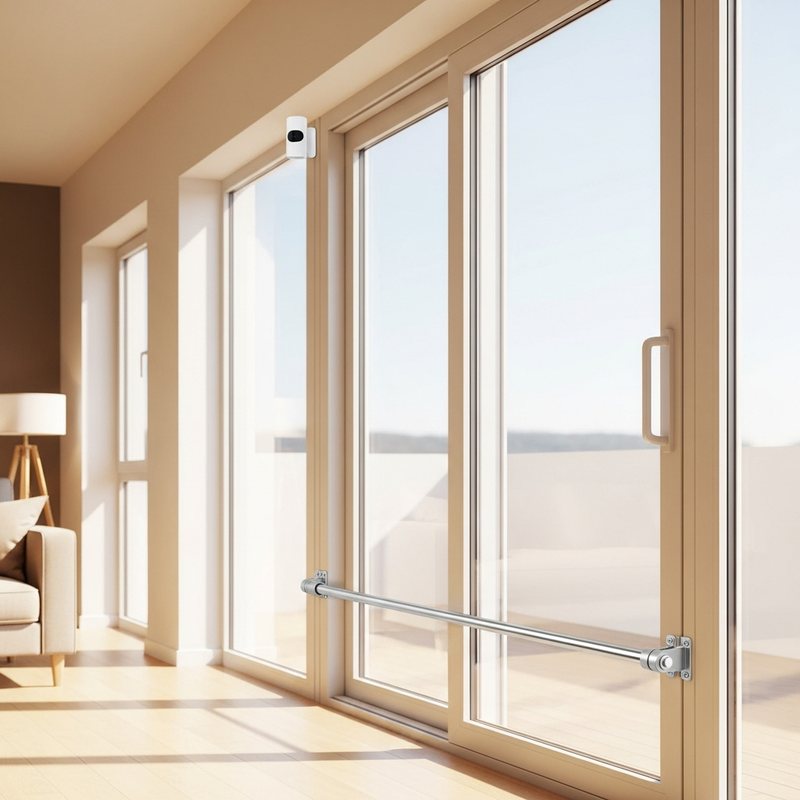
Why Burglars Love Sliding Glass Doors (And How to Change That)
Before I show you how to secure your door, you need to understand why it is vulnerable in the first place. This is not just theory. This is what I have learned from two decades of working with locksmiths, security consultants, and yes, even reformed burglars who shared their methods.
When you understand how a burglar thinks, you can build a defense that actually works.
The Three Weak Points Every Sliding Door Has
Every standard sliding glass door has three critical vulnerabilities. Burglars know all three. Most homeowners know none of them.
Weak Point One: The Factory Lock
The lock that came with your sliding door is not really a lock. It is a latch. It was designed to keep the door closed against wind, not against a determined intruder.
Most factory latches can be defeated with a simple flathead screwdriver. Some can be bypassed by simply wiggling the door while applying upward pressure. I have seen experienced locksmiths open these latches in under ten seconds.
Weak Point Two: The Track System
Your sliding door sits on a track. It is designed to slide smoothly. But that same design creates a vulnerability. With enough upward force, the entire door panel can be lifted out of the track.
I have personally demonstrated this to homeowners who did not believe me. You grab the door frame, lift straight up, and pull the bottom toward you. The door pops right out. No tools required. No noise. No evidence.
Weak Point Three: The Glass
This one seems obvious, but most people underestimate it. Yes, sliding doors have a lot of glass. And yes, that glass can be broken.
But here is what most people do not realize. Tempered glass, which is used in most sliding doors, breaks in a specific pattern. It shatters into small pieces that fall away cleanly. An intruder can create an entry hole in seconds without cutting themselves.
Some burglars carry small ceramic fragments from spark plugs. When thrown at tempered glass, these fragments shatter it almost silently. It is a technique that has been around for decades.
How Burglars Actually Break Into Sliding Doors
Based on conversations I have had with security professionals and law enforcement over the years, here are the three most common methods burglars use.
Method One: The Lift and Pull
This is the most common technique. The burglar grabs the door frame, lifts upward to disengage it from the track, then pulls the bottom of the door toward them. The whole process takes about thirty seconds for someone who knows what they are doing.
Method Two: The Pry Attack
A pry bar or large screwdriver is inserted between the door and the frame near the lock. With leverage, the burglar forces the latch open. Most factory latches cannot withstand more than fifty pounds of force. A strong adult can generate several hundred pounds with a pry bar.
Method Three: The Glass Break
If the first two methods fail or seem too risky, breaking the glass is the backup plan. A quick strike with a hard object creates an entry point. The burglar reaches through, unlocks the door from inside, and walks in.
The 60-Second Rule That Explains Everything
Here is the most important thing I have learned about home security in twenty years.
This is why layered security works. A security bar adds time. A secondary lock adds more time. Security film adds even more time. Alarm sensors add risk of detection.
Stack enough layers, and your sliding door goes from being the easiest entry point to the hardest. That is exactly what we are going to do.
5 Proven Ways to Secure Your Sliding Glass Door
Each method below addresses one or more of the three vulnerabilities I mentioned. When combined, they create a comprehensive defense system that gives you real protection and real peace of mind.
I will explain each method in detail, including difficulty level, cost, and exactly what to look for when choosing products.
1. Install a Heavy-Duty Security Bar
This is where I tell every homeowner to start. A security bar is the simplest, cheapest, and most effective first layer of defense.
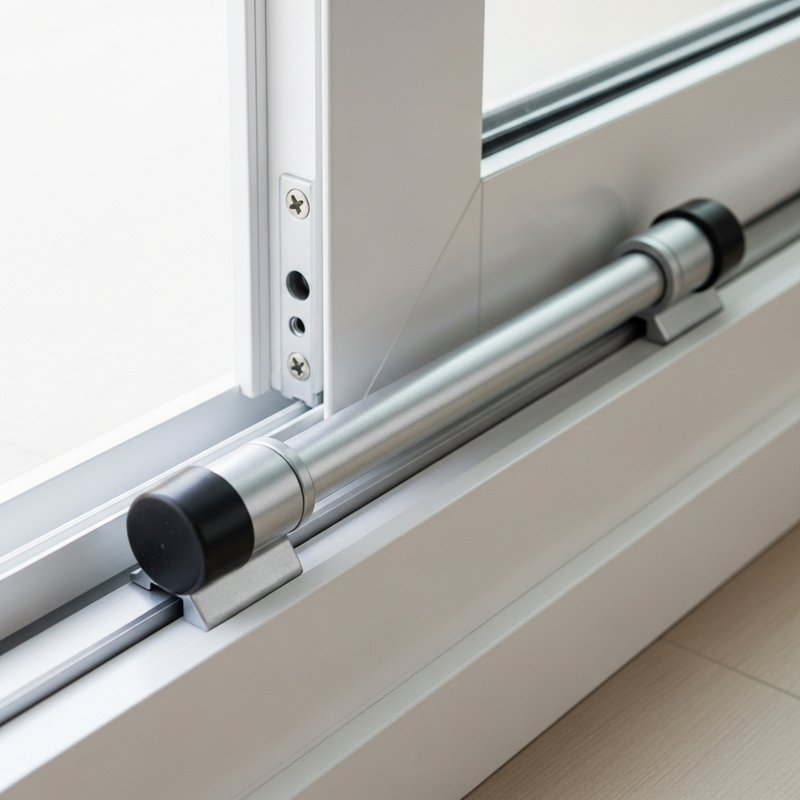
A security bar is a sturdy metal rod that sits in the bottom track of your sliding door. When in place, it physically prevents the door from sliding open, even if someone defeats the lock.
I have used security bars in every home I have lived in for the past eighteen years. They work. Period.
Why This Works
A security bar defeats both the pry attack and the lift-and-pull technique. Even if a burglar manages to disengage the factory lock, the bar holds the door in place. They would have to break the bar itself, which creates noise and takes time.
The best security bars are made of steel, not hollow aluminum. They have adjustable lengths to fit different door widths. And they have rubberized ends that grip the track without scratching it.
What to Look For
Not all security bars are created equal. Here is what I look for after testing dozens of them.
First, solid steel construction. Avoid anything that feels hollow or lightweight. The bar should feel substantial in your hands.
Second, adjustable length. Your door width is different from your neighbor's. A good bar adjusts to fit precisely with no gaps.
Third, a flip-up design. The best bars have a hinge that lets you flip the bar upward when you want to use the door. This means you do not have to remove it completely every time you go outside.
Fourth, rubber or silicone end caps. These grip the track firmly and protect your floor from scratches.
Difficulty Level: Extremely easy. No tools required. Install in two minutes.
Cost: 15 to 35 dollars for a quality steel bar.
2. Add a Secondary Track Lock or Foot Lock
A secondary lock is your second layer of defense. It works alongside the factory lock and security bar to create another obstacle.
There are two main types: track locks and foot locks.
Track locks screw into or clamp onto the door track. They create a physical stop that prevents the door from sliding past that point.
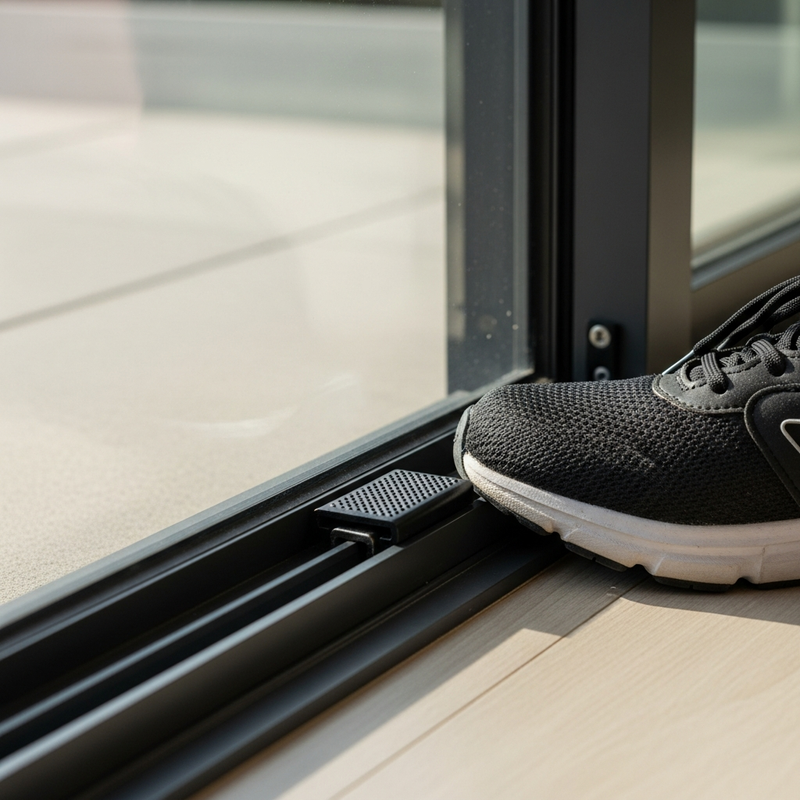
Foot locks install at the base of the door and are operated with your foot. You step on a lever to engage or disengage the lock. These are my personal favorite because they are so convenient.
Why This Works
Remember the lift-and-pull technique I mentioned? A properly positioned secondary lock stops this attack completely.
The key is placement. Install your secondary lock near the middle of the door, not at the edge. When a burglar tries to lift and pull, they create leverage at the edges. A lock in the center resists that leverage effectively.
I also recommend placing the secondary lock at a different height than the factory lock. This forces an intruder to work on two different points simultaneously, which is much harder.
What to Look For
For track locks, choose one with a metal body and screws, not just adhesive. Adhesive-only locks can be defeated with enough force.
For foot locks, look for solid steel construction and a positive locking mechanism that clicks firmly into place. You should be able to feel and hear when it engages.
Some foot locks require drilling into your floor or door frame. Others use heavy-duty adhesive or pressure mounting. If you rent your home, look for non-permanent options.
Difficulty Level: Easy to moderate. Some require drilling; others do not.
Cost: 15 to 40 dollars depending on type and quality.
3. Apply Shatterproof Security Film to the Glass
This is the upgrade that most homeowners overlook. And honestly, it might be the most important one.
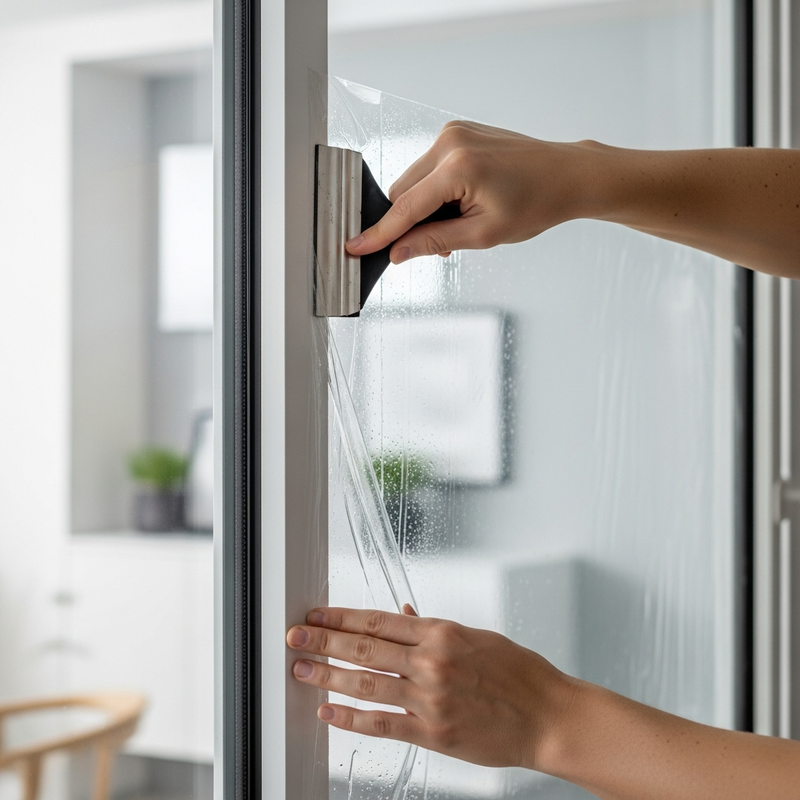
Security film is a thick, clear polyester layer that adheres directly to your glass. You cannot see it once installed. But when someone tries to break the glass, the film holds all the shattered pieces together.
The glass still cracks. But it does not fall away. The intruder has to keep hitting and pulling to create a hole large enough to climb through. This takes time, creates noise, and often discourages them entirely.
Why This Works
Security film defeats the glass break attack. It transforms your glass from a vulnerability into a barrier.
I installed security film on my own patio door about nine years ago. It is still there, still clear, still protecting. You genuinely cannot tell it is there until you try to break through.
The best part? Even if a burglar does eventually get through the film, the time it takes triggers your other defenses. Your alarm sensors activate. Neighbors might notice. The burglar's 60-second window closes fast.
What to Look For
Thickness matters more than brand. Look for film rated at 4 mil or thicker. Anything thinner provides minimal protection. For maximum security, 8 mil or 12 mil films are available, though they cost more and are harder to install.
Make sure the product specifically states it is designed for security or impact resistance. Decorative films, privacy films, and UV-blocking films offer no break-in protection whatsoever.
Consider professional installation if you are not confident in your DIY skills. The film must be applied without bubbles, and the edges should extend into the frame for maximum hold. Poor installation reduces effectiveness significantly.
Difficulty Level: Moderate. Requires patience and precision. Consider professional installation for large doors.
Cost: 40 to 100 dollars for DIY film for one door. Professional installation adds 100 to 200 dollars.
4. Mount a Door Alarm Sensor
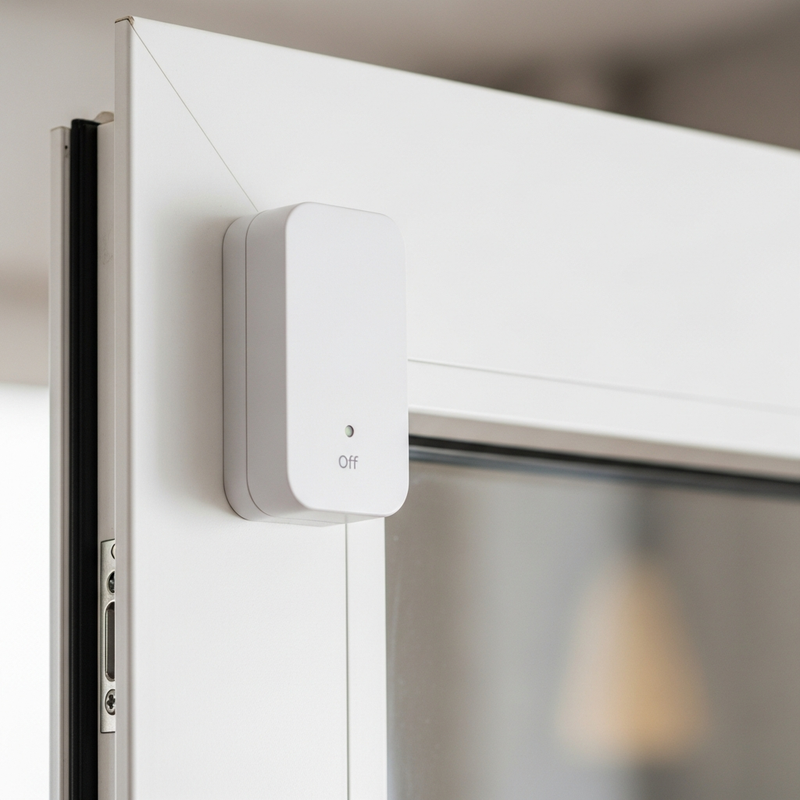
Now we move from physical barriers to detection and alerts. A door alarm sensor tells you immediately when your sliding door opens.
Modern sensors are small, wireless, and easy to install. Most use adhesive backing and connect to a smart home hub or a standalone alarm system. When the door opens, you get an alert on your phone, a loud siren, or both.
Why This Works
Alarm sensors add risk for the burglar. Even if they manage to defeat your physical barriers, the moment they open that door, you know about it.
If you are home, you can respond immediately. If you are away, you can call authorities or check your cameras. The burglar has no way of knowing whether someone is already on the way.
This psychological element is powerful. Burglars want quiet, anonymous entry. An alarm sensor eliminates that possibility.
What to Look For
I recommend sensors that connect to a smart home system rather than standalone screamers. Smart sensors send alerts to your phone, log entry times, and integrate with other devices like cameras and lights.
Look for sensors with long battery life. The best ones last two to three years on a single battery. Cheap sensors drain quickly and become unreliable.
Position the sensor at the top of the door frame where it is less visible. Some burglars check for sensors before attempting entry. A hidden sensor maintains your advantage.
Difficulty Level: Very easy. Peel-and-stick installation. Pair with app in minutes.
Cost: 15 to 50 dollars depending on brand and features.
5. Add a Glass Break Sensor as Your Last Line of Defense
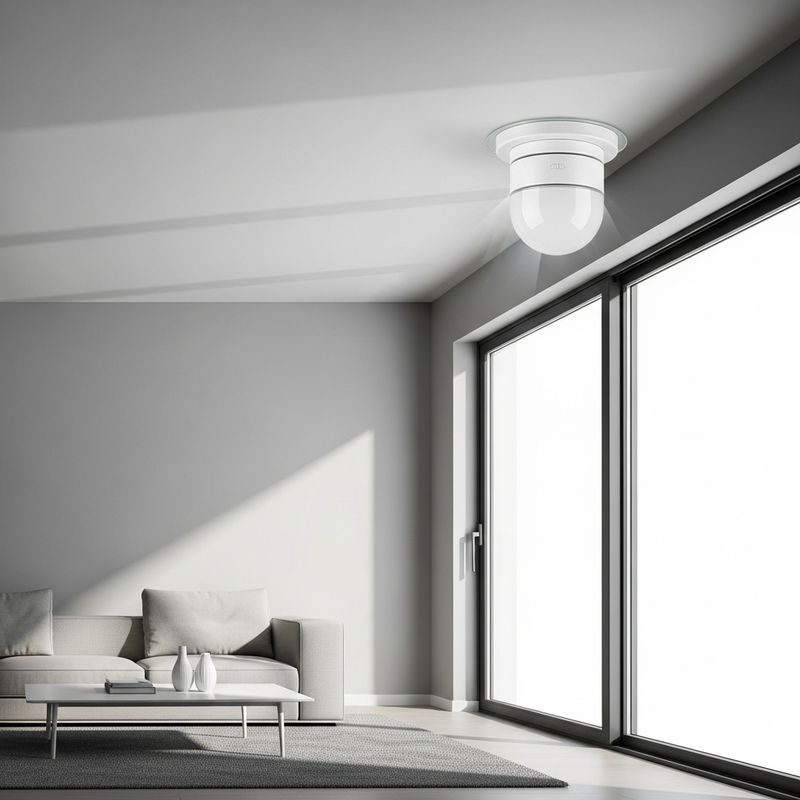
A glass break sensor is your backup plan. It listens for the specific sound frequency of breaking glass. When it detects that sound, it triggers an immediate alert.
This catches the one scenario your other defenses might miss: a burglar who decides to smash through the glass rather than try to bypass the locks.
Why This Works
Your security bar, secondary lock, and door sensor all protect against the door being opened. But what if someone just breaks the glass and climbs through?
A glass break sensor covers this gap. The moment that glass shatters, the sensor activates. You get an alert. Your alarm sounds. The 60-second clock starts ticking against the burglar.
I consider glass break sensors the final layer in a complete sliding door security setup. They handle the scenario that other methods cannot.
What to Look For
Glass break sensors cover a wide area. One sensor can typically monitor all the glass in a single room, including multiple windows and doors. This makes them cost-effective.
Mount the sensor on the ceiling or high on a wall, facing the glass you want to protect. Avoid placing it behind furniture or curtains that might block the sound.
Choose a sensor that integrates with your existing smart home or alarm system. Standalone glass break sensors exist, but integrated ones give you more flexibility and better alerts.
Difficulty Level: Easy. Mount with screws or adhesive. Pair with your system.
Cost: 25 to 60 dollars depending on brand and smart features.
The Layered Security Approach: Why One Method Is Never Enough
Let me be direct with you. Any single method I have described can potentially be defeated by a determined, skilled burglar with enough time.
A security bar can be broken. A lock can be picked. Security film can eventually be penetrated. Sensors can be avoided if someone knows where they are.
But here is what changes everything: combination.
When you layer multiple security methods together, you create a system that is exponentially harder to defeat. Each layer adds time. Each layer adds difficulty. Each layer increases the chance of detection.
Think about it from the burglar's perspective.
They approach your sliding door. They try to lift it off the track, but the secondary lock holds. They try to pry the lock, but the security bar blocks the door. They consider breaking the glass, but they see a sensor on the frame. They know an alarm will sound the moment they act.
Suddenly, your home is not worth the risk. They move on to an easier target. That is exactly what you want.
Bonus Security Tips Most People Overlook
The five methods above will dramatically improve your sliding door security. But after twenty years in this field, I have learned a few additional tricks that most people never consider.
Securing the Stationary Panel
Most sliding doors have two panels: one that slides and one that stays fixed. Almost everyone focuses on the sliding panel. Almost everyone forgets about the stationary one.
Here is the problem. The stationary panel can also be lifted out of its track using the same technique that works on the sliding panel. If you only secure the sliding panel, you have left a back door open.
The fix is simple. Install anti-lift pins or screws in the upper track above the stationary panel. These prevent the panel from being lifted high enough to clear the bottom track. Most hardware stores sell these for a few dollars.
Upgrading Your Factory Lock
If you own your home and want maximum security, consider replacing the factory latch entirely. Aftermarket sliding door locks with double bolts or key cylinders provide significantly more resistance than standard latches.
This upgrade requires some drilling and basic handyman skills. It is not difficult, but it is more involved than the other methods. For renters, this usually is not an option, but the other methods I have described will compensate.
Smart Lighting Near Your Patio Door
Burglars hate being seen. A motion-activated light near your sliding door is a powerful deterrent that costs very little.
Position the light to illuminate the entire approach to the door. Choose a light that is mounted high enough that someone cannot easily unscrew or disable it.
Smart lights that connect to your home automation system are ideal. You can set schedules, receive alerts when motion is detected, and control them remotely. Some smart lights even flash or change color to draw attention during an alert.
Night Mode Security Routine
Develop a simple routine before you go to bed each night. Check that your security bar is in place. Verify your secondary lock is engaged. Make sure your alarm system is armed.
This takes thirty seconds. It becomes automatic after a week. And it ensures you never accidentally leave your sliding door vulnerable overnight.
I have done this routine every night for years. It is as automatic as brushing my teeth now. And it gives me real peace of mind.
Renter-Friendly Options: No Drilling Required
If you rent your home, you might think serious security is not an option. You cannot drill holes. You cannot make permanent modifications. Your landlord has rules.
Good news. You can still secure your sliding glass door effectively without any permanent changes.
Security bars simply rest in the track. No installation whatsoever. Remove them when you move out.
Adhesive track locks stick to the track or frame. High-quality versions hold firmly but can be removed without damage when you leave.
Security film adheres to the glass but can be peeled off. It might leave some residue, but that cleans off with the right solvent.
Wireless door sensors attach with adhesive pads. They come off cleanly when you move. Take your entire security system with you to your next home.
Glass break sensors can be placed on a shelf or mounted with removable adhesive. No permanent installation required.
I have helped many renters secure their sliding doors using only these non-permanent methods. The protection level is nearly identical to permanent installations. You just have more flexibility.
How Much Does It Cost to Secure a Sliding Glass Door?
Let me give you a realistic breakdown of what you can expect to spend. These prices reflect what I have paid personally and what I have seen in the market over the past few years.
| Security Method | Cost Range | DIY Difficulty |
|---|---|---|
| Security Bar | 15 to 35 dollars | Very Easy |
| Secondary Track Lock or Foot Lock | 15 to 40 dollars | Easy to Moderate |
| Security Film (DIY) | 40 to 100 dollars | Moderate |
| Security Film (Professional Install) | 150 to 300 dollars | N/A |
| Door Alarm Sensor | 15 to 50 dollars | Very Easy |
| Glass Break Sensor | 25 to 60 dollars | Easy |
Budget Option (Under 50 dollars): Security bar plus adhesive track lock. This gives you two physical barriers for minimal cost. If money is tight, start here.
Recommended Setup (100 to 150 dollars): Security bar, foot lock, door sensor, and glass break sensor. This covers physical barriers and electronic detection.
Complete Protection (200 to 300 dollars): All five methods including professional-grade security film. This is what I have in my own home. It is the gold standard.
Compare any of these costs to the average loss from a burglary, which runs into thousands of dollars. Add the emotional trauma, the loss of irreplaceable items, and the feeling of violation in your own home. A few hundred dollars for real security is one of the best investments you will ever make.
5 Common Mistakes That Leave Your Door Vulnerable
Over the years, I have seen homeowners make the same mistakes again and again. Avoid these traps, and you will be ahead of most people.
This is the biggest mistake I see. That factory latch is not designed for security. It is designed for convenience. Never rely on it as your only line of defense.
Yes, a broomstick in the track is better than nothing. But thin wooden rods snap easily. A determined intruder can break a thin dowel with minimal effort. Use a proper steel security bar instead.
Locks and bars are important. But if someone can simply break through the glass, your locks become irrelevant. Security film addresses this blind spot.
Door sensors need to detect the door opening. Glass break sensors need to hear the glass breaking. Hiding them in corners or behind furniture reduces their effectiveness. Position them properly.
Most people secure the sliding panel and forget the fixed one. Both panels can be lifted out of the track. Secure both, or you leave a gap in your defense.
How to Test Your Sliding Door Security
After you install your security measures, take a few minutes to test them. Do not assume everything works perfectly just because you installed it.
Test your security bar. Try to slide the door while the bar is in place. It should not budge. If the bar slips or the door moves, adjust the bar length or position.
Test your secondary lock. Engage the lock and try to force the door open. Apply pressure at different points. The lock should hold firm with no movement.
Test your door sensor. Arm your system, then open the door slowly. The sensor should trigger within one to two seconds. If there is a delay or no alert, check the sensor positioning and battery.
Test your glass break sensor. Most sensors come with a test mode or a testing device. Use it. Clap loudly near the sensor. Some sensors respond to this; others require the specific frequency of breaking glass. Follow the manufacturer's testing instructions.
Test at night. Your security needs to work in darkness. Walk around your home at night and look at your sliding door from outside. Is the area well-lit? Can you see your sensors? Make adjustments as needed.
I recommend testing your security setup every few months. Batteries die. Sensors shift. Locks loosen. Regular testing catches these issues before they matter.
Final Thoughts: Sleep Better Starting Tonight
Your sliding glass door does not have to be a security weakness. With the right combination of physical barriers and electronic detection, you can transform it from the easiest entry point in your home to one of the hardest.
Let me summarize the approach I recommend.
Start with a security bar. It is the fastest, cheapest, and most effective first step. You can install it in two minutes and have immediate protection tonight.
Add a secondary lock for another physical layer. Position it correctly, and you double the difficulty for any intruder.
Apply security film to address the glass vulnerability. This is the upgrade most people skip, but it might be the most important one.
Install a door sensor to know immediately when your door opens. Connect it to your phone for alerts when you are away.
Finally, add a glass break sensor as your last line of defense. It catches the one scenario that other methods might miss.
Each layer alone is good. Combined, they are excellent. Together, they create a security system that respects the 60-second rule and makes your home a hard target.
I have secured my own sliding doors with exactly these methods. My family sleeps better knowing that our patio door is not an easy entry point. You can have that same peace of mind.
Your home should be your safe place. A few simple upgrades to your sliding glass door can make sure it stays that way.
Stay safe.



0 Comments