
Benefits of Smart Home Technology for Families: A Real Parent's Guide
Last updated: February 2026
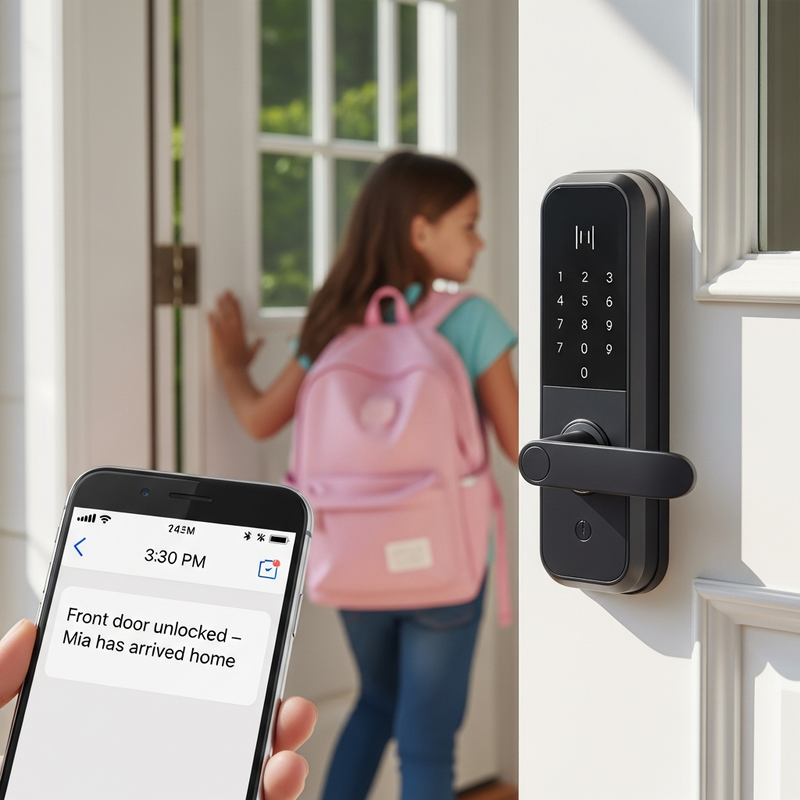
It was 3:30 PM on a Tuesday when I got the notification on my phone.
"Front door unlocked. Mia has arrived home."
I was stuck in a meeting forty minutes away. My daughter had just walked into an empty house after school. But I knew she was safe. I knew the door had locked behind her. I could even see her drop her backpack in the hallway through the camera.
That moment of peace — knowing your child is home and safe when you cannot be there — that is what smart home technology gave my family. Not convenience. Not gadgets. Peace of mind.
I have been using smart home technology in my own family for eight years now. I have also helped over fifty families set up their homes during that time. And here is what I have learned.
Smart home technology is not about having the coolest gadgets. For families, it is about getting back time, reducing anxiety, and creating a safer environment for the people you love most.
In this guide, I will share the real benefits of smart home technology for families. Not the marketing promises. The actual, lived experience of how it changes daily life when you have kids to raise, aging parents to care for, or simply a household to manage.
Some of these benefits will save you money. Others will save you time. But the most valuable ones? Those will give you something you cannot buy: peace of mind.
- Peace of mind when you are away from home
- More time for what actually matters
- Lower energy bills without thinking about it
- Safety that works even when you forget
- Teaching kids responsibility through technology
- Independence for elderly family members
- Better sleep for the whole family
- Simplified morning and evening routines
- Remote care and check-ins
- A home that grows with your family
Let me walk you through each of these benefits in detail, with real examples from my own family and the families I have worked with.
Why Smart Homes Matter More for Families Than Anyone Else
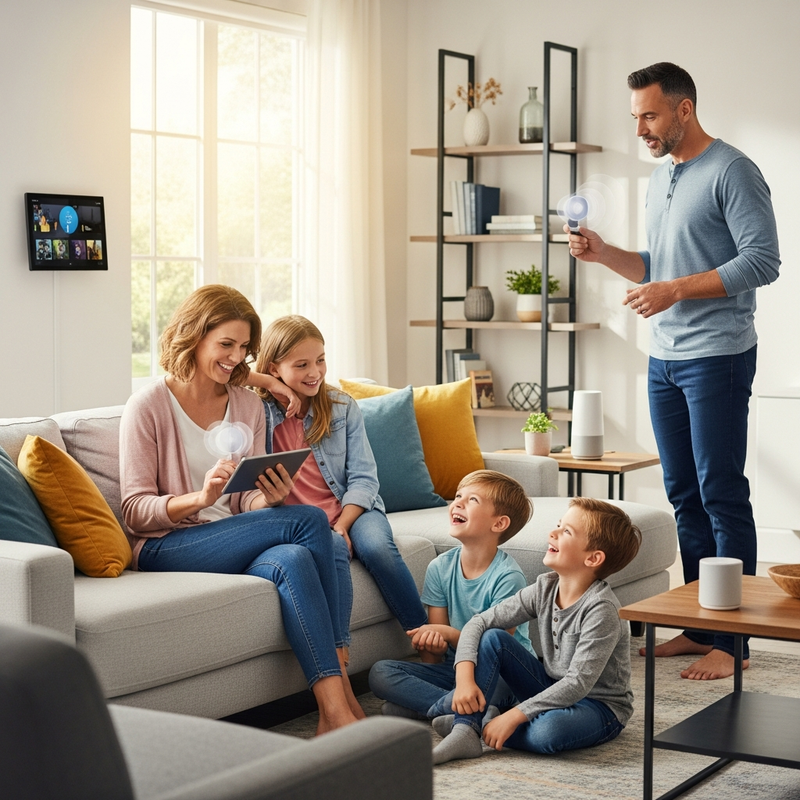
Single people and couples benefit from smart home technology. But families? Families benefit exponentially more. And the reason is simple.
When you have a family, you are managing multiple schedules, multiple safety concerns, multiple comfort preferences, and multiple points of vulnerability. A forgotten locked door is not just inconvenient. It is a security risk for your children.
A heating system that runs all day is not just wasteful. It is money that could go toward your kid's education or a family vacation.
The mental load of remembering everything — did I turn off the stove, did the kids get home safely, is the house too cold for grandma — that constant background anxiety wears on you.
Smart home technology does not eliminate all of life's challenges. But it removes dozens of small worries from your daily mental checklist. And when you are raising a family, that matters more than you might think.
10 Real Benefits of Smart Home Technology for Families
These are not theoretical benefits. These are the advantages I see play out every single day in my home and in the homes of families I have worked with.
1. Peace of Mind When You're Away from Home
This is the benefit that sold me on smart home technology eight years ago. And it remains the most valuable one for most families I talk to.
When you are at work, running errands, or traveling, your home and the people in it are still on your mind. Did the kids get home from school? Is the babysitter following the routine? Did I remember to lock the back door?
Smart home technology answers these questions in real time.
A smart lock tells you when each family member arrives home. A security camera lets you check in without calling and interrupting. Motion sensors alert you to unexpected activity. Smart smoke and carbon monoxide detectors notify you immediately if something goes wrong.
The peace of mind is not theoretical. It is the difference between checking your phone anxiously every thirty minutes and actually being present in your meeting or enjoying your dinner with friends.
2. More Time for What Actually Matters
Time is the one resource you can never get back. Smart home technology gives you small chunks of it back, every single day.
You do not have to walk around the house turning off lights anymore. Your smart lights handle it.
You do not have to adjust the thermostat manually throughout the day. Your smart thermostat learns your family's schedule and does it automatically.
You do not have to remember to lock all the doors at night. Your smart locks can lock automatically at a set time or when everyone is home.
These sound like tiny conveniences. And individually, they are. But add them up over a week, a month, a year. Those minutes become hours. Those hours become time you can spend reading to your kids, having dinner together, or actually relaxing instead of managing the house.
3. Lower Energy Bills Without Thinking About It
When I installed a smart thermostat in my home, I did not expect much. Maybe a small reduction in my heating bill. What I got surprised me.
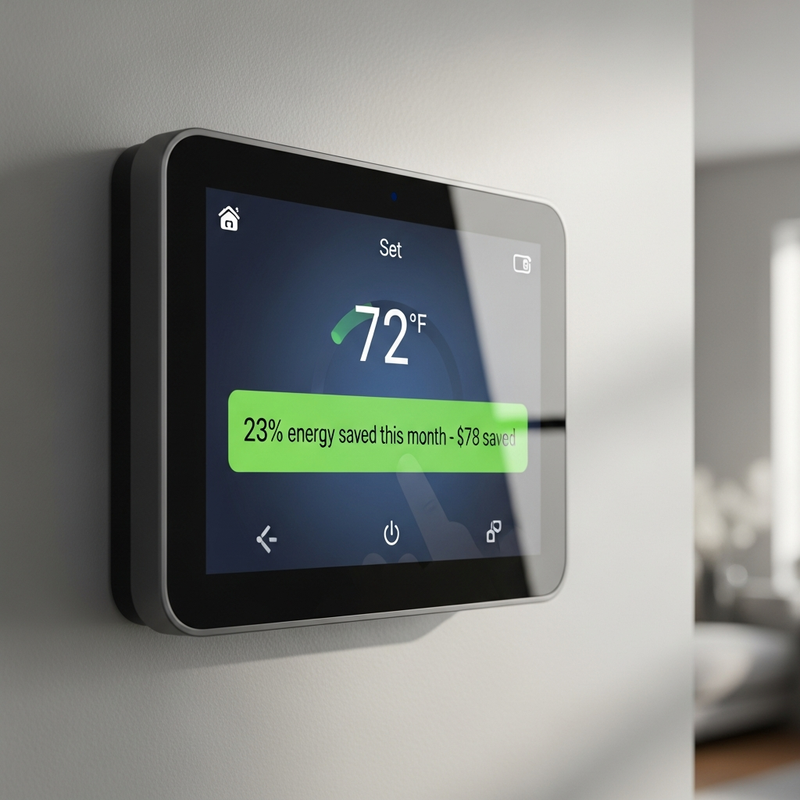
My energy bill dropped by 23 percent in the first year. That is over three hundred dollars annually for my family. And I did not do anything except install it and let it learn our schedule.
Smart thermostats save families money because they optimize heating and cooling based on when you are actually home. No more heating an empty house all day. No more air conditioning running overnight when everyone is asleep and the temperature drops naturally.
Smart lights turn off automatically when rooms are empty. Smart plugs cut phantom power drain from devices on standby.
The savings are real. And for families on a budget, three hundred dollars a year can cover a lot of school supplies, sports fees, or family activities.
4. Safety That Works Even When You Forget
Human memory is fallible. Especially when you are juggling work deadlines, school pickups, meal planning, and everything else that comes with family life.
Did I lock the front door? Did I turn off the stove? Did I close the garage?
I have had mornings where I was halfway to work before that panic set in. With smart home technology, those moments of panic disappear.
Smart locks auto-lock after a set time. Smart cameras let you verify the stove is off from your phone. Smart garage door openers alert you if the garage has been open for more than ten minutes.
But the real safety benefit goes deeper. Smart smoke detectors alert your phone if smoke is detected when you are not home. Water leak sensors notify you before a small leak becomes a disaster. Smart carbon monoxide detectors can literally save lives.
5. Teaching Kids Responsibility Through Technology
This benefit surprised me. I did not expect smart home technology to become a parenting tool. But it has.
My kids know that when they get home, the smart lock logs their arrival. There is accountability built in. No more "I forgot" when they were supposed to come straight home after school.
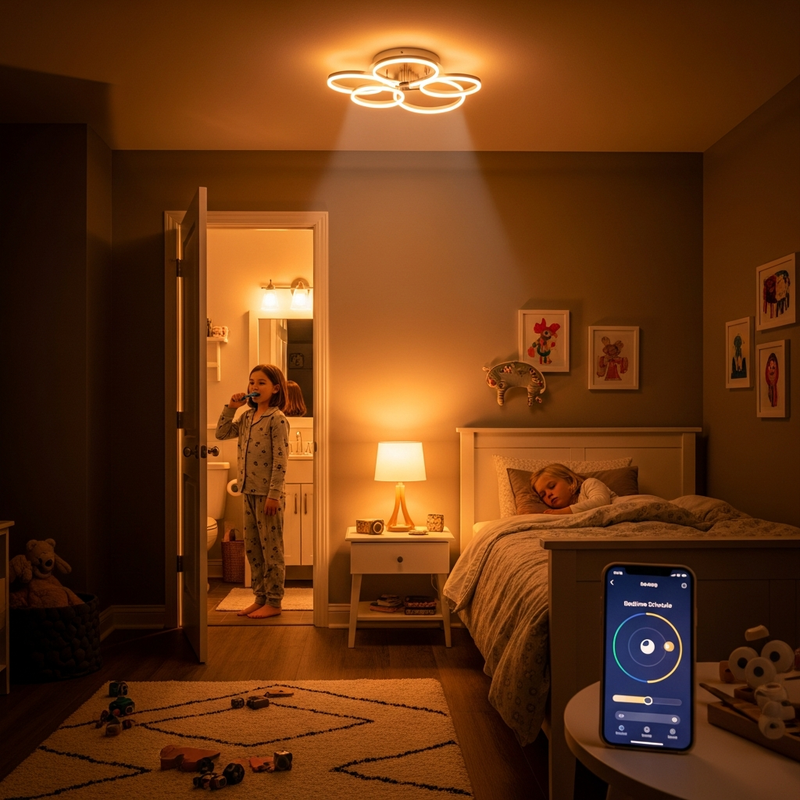
We set routines where the lights in their rooms turn red if it is past bedtime and they are still up. It is a gentle, non-nagging reminder.
They can use voice commands to control lights and music in their rooms. But those privileges come with responsibilities. If they do not do their chores, those voice controls get temporarily disabled through the app.
It is not about surveillance or control. It is about creating clear expectations and natural consequences using tools they actually understand and engage with.
6. Independence for Elderly Family Members
If you have aging parents or grandparents living with you, smart home technology can be life-changing for them.
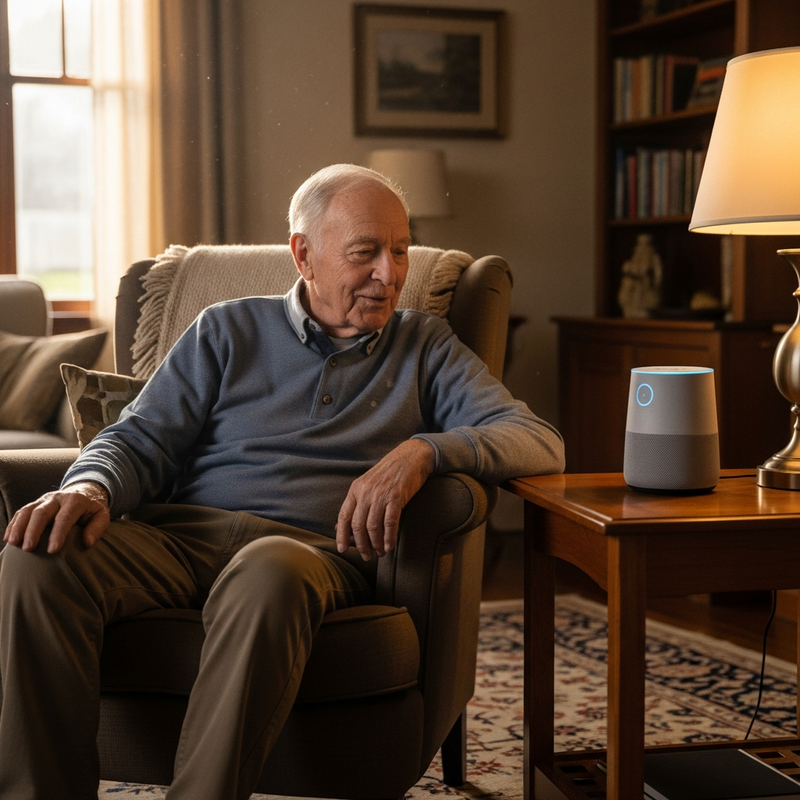
Voice assistants let them control lights, thermostats, and entertainment without getting up or fumbling with small buttons. For someone with arthritis or limited mobility, this is genuine independence.
My father-in-law lives with us. He is seventy-eight. He struggles with the tiny buttons on light switches and remote controls. But he can say "turn on the kitchen lights" or "set the temperature to seventy-two" without any trouble.
Smart medication reminders help ensure they take pills on time. Motion sensors can alert you if they have not moved around the house at their usual time, providing a subtle safety check without invasive monitoring.
It lets them maintain dignity and autonomy while giving you the assurance that they are safe.
7. Better Sleep for the Whole Family
Sleep is sacred when you have a family. And smart home technology can protect it in surprising ways.
Smart lights can gradually dim in the evening to signal bedtime to your body and your kids' bodies. They can simulate sunrise in the morning for a gentler wake-up than a blaring alarm.
Smart thermostats can lower the temperature slightly at night, which studies show improves sleep quality.
Smart locks and security systems eliminate the "did I lock the door" anxiety that keeps you awake.
And for parents of young kids, smart baby monitors with breathing tracking and room temperature monitoring give you the peace of mind to actually sleep instead of checking on them every hour.
8. Simplified Morning and Evening Routines
Mornings with kids are chaos. I know. I live it.
But smart home routines have made our mornings noticeably less stressful.
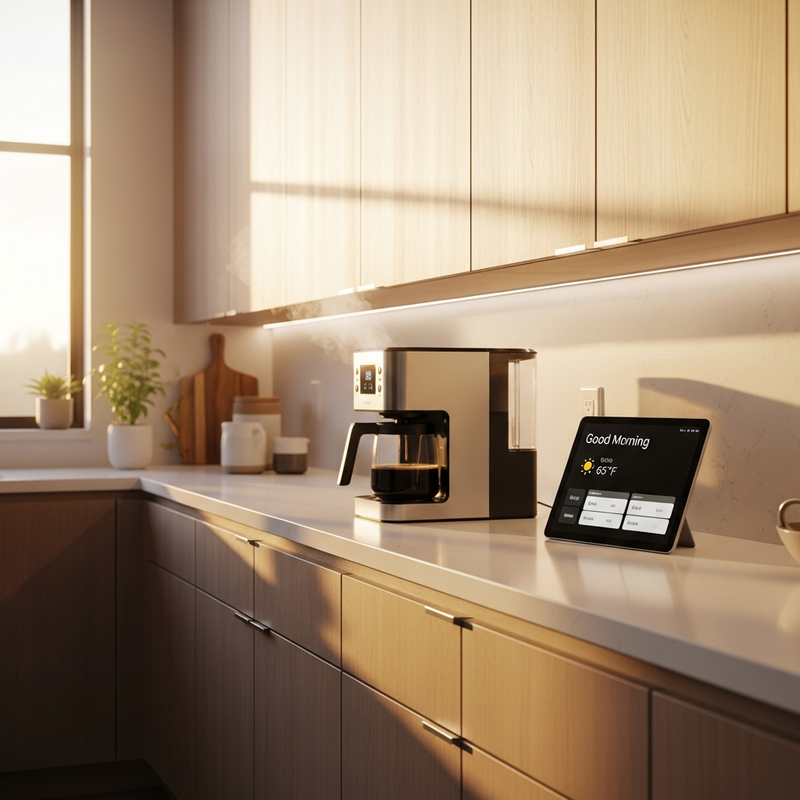
At 6:30 AM, our bedroom lights gradually brighten. The thermostat raises the temperature. The coffee maker starts brewing. By the time we are out of bed, the house is warm and coffee is ready.
At 7:00 AM, the kids' lights turn on with an announcement through their smart speakers: "Good morning. Time to get ready for school."
In the evening, we have a "bedtime" routine. One voice command dims all the lights downstairs, locks the doors, sets the thermostat to sleep mode, and turns on the night lights in the hallways.
These routines do not eliminate the chaos of family life. But they remove dozens of small tasks from your mental checklist. And that makes a real difference.
9. Remote Care and Check-Ins
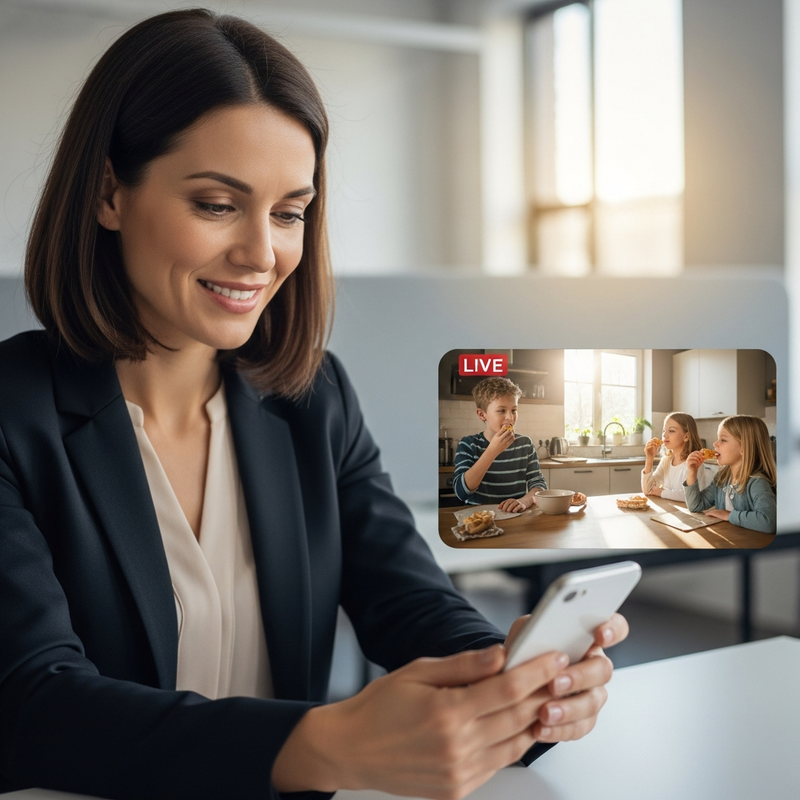
Being able to check in on your family remotely is not about distrust. It is about connection and safety.
When my kids were younger, I could check the camera to see if the babysitter was following the routine. Not because I did not trust her, but because it gave me peace of mind.
Now that they are older, I can check to make sure they got home safely without calling and interrupting whatever they are doing.
I can see if my father-in-law is up and moving around in the morning without knocking on his door and waking him if he is sleeping in.
Two-way audio on smart cameras and doorbells means you can talk to your kids from work if they need help with homework or have a question.
It is not surveillance. It is staying connected even when you cannot physically be there.
10. A Home That Grows With Your Family
Your family's needs change. Babies become toddlers. Toddlers become teenagers. Parents age. Family members move in or out.
The beauty of smart home technology is that it adapts.
When you have a newborn, you add a smart baby monitor and a noise machine you can control from your phone.
When your kids are school-age, you add smart locks and cameras to monitor their safe arrivals.
When they become teenagers, you adjust settings to give them more independence with accountability still in place.
When aging parents move in, you add voice assistants and accessibility features.
You are not locked into a single system. You build and adjust as your family evolves. That flexibility is incredibly valuable.
Benefits by Age Group: Who Gains What
Different family members benefit from smart home technology in different ways. Let me break it down by age group.
Smart Home Benefits for Families with Young Children
Safety monitoring: Smart baby monitors track breathing, room temperature, and sleep patterns. You can check on your baby from another room without waking them.
Routine reinforcement: Smart lights that change color at bedtime. Voice announcements for bath time or meal time. Visual cues kids respond to.
Childproofing automation: Smart plugs that cut power to outlets. Cameras to monitor play areas. Door sensors that alert you if a child opens an exterior door.
Parent sanity: Being able to turn off all the lights in the playroom from your phone instead of walking there for the tenth time today.
Smart Home Benefits for Families with Teenagers
Accountability without nagging: Smart locks log when they arrive home. No more "I forgot" excuses. They know you know.
Controlled independence: They can invite friends over when you are not home, but cameras and sensors let you maintain awareness without hovering.
Teaching responsibility: Smart home privileges tied to responsibilities. Chores done? Voice controls enabled. Chores skipped? Controls disabled until complete.
Communication tool: Two-way audio on cameras and doorbells. They can buzz you at work if they need something instead of calling.
Smart Home Benefits for Multi-Generational Families
Accessibility for elderly members: Voice control eliminates the need to use small buttons or navigate complex interfaces.
Safety monitoring: Motion sensors and activity tracking let you ensure elderly family members are moving around normally without invasive check-ins.
Independent living: Seniors can control their environment without asking for help, maintaining dignity.
Emergency response: Voice-activated emergency calls. Fall detection integration. Immediate alerts if something is wrong.
Real Family Scenarios: How It Actually Works
Let me paint some realistic pictures of how smart home technology functions in actual family life.
The Working Parent's Morning
6:15 AM. Your smart thermostat has already warmed the house to a comfortable temperature. Your bedroom lights gradually brighten, simulating sunrise.
6:30 AM. You get up. The coffee maker has already brewed. You did not touch anything. It is part of your "Good Morning" routine.
6:45 AM. The kids' lights turn on with a gentle voice reminder: "Time to wake up for school."
7:30 AM. Everyone is ready. You leave for work. As you pull out of the driveway, you tap "Away Mode" on your phone. The thermostat adjusts to save energy. All unnecessary lights turn off. The security system arms. The smart lock verifies all doors are locked.
You did not have to walk around checking everything. It happened automatically. You saved five minutes and eliminated three items from your mental worry list.
The Single Parent's Peace of Mind
3:45 PM. You are in back-to-back meetings. Your phone buzzes: "Front door unlocked. Emma has arrived home."
You glance at your security camera. Your daughter is safely inside. The door locks behind her automatically. You see her head to the kitchen for a snack.
You send her a quick text: "Hey sweetie, saw you got home. How was school?" She responds. You know she is safe. You can focus on work without that nagging worry.
6:00 PM. You are heading home but stuck in traffic. You use your phone to turn on lights and adjust the thermostat. By the time you arrive, the house is warm and welcoming.
The Multi-Generational Household
7:00 AM. You check your phone. The motion sensor in your father's room activated at 6:30 AM. He is up and moving. You do not need to knock on his door and risk waking him if he were still sleeping.
Throughout the day, he uses voice commands to control his environment. Lights. Temperature. Music. He does not need to ask anyone for help.
9:00 PM. Your kids are in bed. Your father says goodnight and heads to his room. You activate "Night Mode" from your phone. Hallway night lights turn on. Exterior lights stay bright. Motion sensors monitor for any unusual activity.
Everyone sleeps safely and independently.
Addressing the Concerns Every Parent Has
I have talked to hundreds of families about smart home technology. The same concerns come up again and again. Let me address them honestly.
Is Smart Home Technology Safe for Kids?
This is the first question most parents ask. And it is the right question to ask.
The short answer: Yes, when properly set up.
Modern smart home devices from reputable brands use encryption to protect your data. They have secure login systems. Many have specific parental control features.
But you have responsibilities too. Use strong, unique passwords. Enable two-factor authentication. Keep device firmware updated. Review privacy settings on every device.
I recommend creating a separate Wi-Fi network for your smart home devices. This isolates them from devices that contain sensitive personal information.
And talk to your kids about privacy. Explain how the technology works. Make it a teaching opportunity, not a secret system.
What About Privacy and Data Security?
This concern is valid. Smart home devices collect data. Some send that data to cloud servers.
Here is what I do to protect my family's privacy:
Choose reputable brands. Stick with well-known companies that have clear privacy policies and good security track records.
Read privacy policies. Yes, they are long and boring. But skim them. Know what data is collected and how it is used.
Disable unnecessary features. Many devices collect more data than they need to function. Turn off features you do not use.
Use local processing when possible. Some devices process data locally instead of sending everything to the cloud. Those offer better privacy.
Regularly review connected devices. Once a month, I check what devices are connected to my network and remove anything we no longer use.
Will My Family Actually Use It?
This is a practical concern. You do not want to invest in technology that sits unused.
Here is what I have learned: Simplicity is everything.
If your smart home system requires everyone to open an app, navigate through menus, and execute multiple steps, they will not use it.
But if it works through voice commands or happens automatically, everyone uses it. Even my technology-resistant father-in-law uses our smart home daily because all he has to do is speak.
Start with devices that solve real problems your family faces. Do not buy gadgets for the sake of gadgets.
Does your family forget to lock doors? Start with smart locks. Do your kids leave lights on constantly? Start with smart lights with motion sensors. Match technology to actual needs.
Where to Start: A Budget-Based Roadmap
The biggest mistake families make is trying to do everything at once. It is overwhelming and expensive.
Instead, start small. Pick one or two pain points. Solve those. See how it feels. Then expand.
Here is how I recommend starting based on different budget levels.
The $100 Start: Essential Family Safety
What to buy:
- One smart lock for your most-used entrance
- Two door/window sensors for entry points
What this gives you: You know when family members come and go. You can lock doors remotely if you forget. You get alerts if a door opens unexpectedly.
Why start here: Safety and peace of mind are the highest-value benefits for families. This setup delivers both for minimal cost.
The $500 Setup: Comfort and Convenience
What to add:
- Smart thermostat
- Voice assistant speaker
- Four to six smart bulbs for main living areas
- One security camera for main entrance
What this adds: Energy savings, voice control, automated lighting, and visual verification of who is at your door.
Why this level: This is where smart home moves from safety tool to daily convenience. Your whole family will notice the difference.
The $1500 Complete System: Full Automation
What to add:
- Additional cameras for backyard and other entries
- Smart smoke and carbon monoxide detectors
- Water leak sensors
- Smart garage door opener
- Additional smart lights throughout the home
- Smart plugs for lamps and appliances
What this gives you: Comprehensive coverage. Automated routines. Full voice control. Complete peace of mind.
Why go this far: This is what I have in my home. It is the level where smart home stops being a helpful addition and becomes an integrated system that genuinely makes daily life easier.
| Budget Level | Investment | Primary Benefit | Best For |
|---|---|---|---|
| Starter | $100 to $150 | Safety and peace of mind | Families testing the waters |
| Mid-Range | $400 to $600 | Convenience and energy savings | Families ready to automate daily routines |
| Complete | $1200 to $2000 | Full integration and automation | Families committed to long-term smart living |
Common Mistakes Families Make With Smart Homes
I have made some of these mistakes myself. I have watched families make others. Here is what to avoid.
Not all smart home devices work together. Before buying, check if devices are compatible with your chosen ecosystem (Alexa, Google, Apple HomeKit). Mixing incompatible systems creates frustration and limits functionality.
Smart home devices need reliable Wi-Fi. If your internet is slow or your Wi-Fi does not reach every room, your smart home will frustrate you. Upgrade your router or add mesh Wi-Fi before buying many devices.
Simple beats fancy every time. A system that requires a PhD to operate will not get used. If your spouse and kids cannot figure it out in thirty seconds, simplify it.
Using default passwords. Not enabling two-factor authentication. Never updating firmware. These shortcuts put your family's privacy and safety at risk. Take security seriously from day one.
Do not buy devices randomly. Start with a plan. What problems are you solving? What rooms need attention first? Which family members will use it most? Planning prevents wasted money on gadgets that sit unused.
How Much Time and Money Does a Smart Home Actually Save?
Let me break down the real return on investment based on my own experience and data from families I have worked with.
Time Saved:
- No more walking around turning off lights: 5 minutes daily = 30 hours yearly
- Automated door locking eliminates double-checking: 3 minutes daily = 18 hours yearly
- Thermostat automation removes manual adjustments: 4 minutes daily = 24 hours yearly
- Remote check-ins replace phone calls and worry: 10 minutes daily = 60 hours yearly
Total time saved: Approximately 130 hours per year. That is more than three full work weeks.
Money Saved:
- Smart thermostat energy savings: $200 to $400 yearly
- Smart lights reducing electricity waste: $50 to $100 yearly
- Early leak detection preventing damage: Potentially thousands
- Smart power strips eliminating phantom drain: $30 to $60 yearly
Total typical savings: $300 to $600 annually on energy alone.
But the real value is not in the spreadsheet. It is in the mental load you do not carry anymore. The worry you do not feel. The time you get back with your family.
How do you put a price on coming home to a warm house without thinking about it? On knowing your kids are safe without anxiously checking the clock? On sleeping through the night without worrying if you locked the doors?
That is the real return. And it is priceless.
Final Thoughts: Is Smart Home Technology Worth It for Your Family?
After eight years of living with smart home technology and helping dozens of families set up their homes, here is my honest answer.
Smart home technology will not solve all your family's problems. It will not make your kids behave better or your mornings magically stress-free.
But it will remove dozens of small friction points from your daily life. It will give you back time. It will reduce anxiety. It will make your home safer and more comfortable.
For families, those benefits compound. Because when you have kids to raise, aging parents to care for, or simply a busy household to manage, every small improvement matters.
The peace of mind alone — knowing your kids got home safely, that your doors are locked, that your home is secure — that is worth the investment for most families.
My advice: Start small. Pick one pain point. Maybe it is forgetting to lock doors. Maybe it is worrying about when your kids arrive home. Maybe it is wasted energy heating an empty house.
Solve that one problem with smart technology. See how it feels. Then decide if you want to expand.
You do not need to automate everything. You just need to automate the things that matter to your family.
Smart home technology has genuinely made my family's life better. Not because we have the coolest gadgets. But because we worry less, waste less time on mundane tasks, and have more energy for what actually matters.
Your family deserves that too.



0 Comments